Roasted Pork Tenderloin with Dijon Mustard and Herbs

This pork tenderloin recipe is delicious and beautiful enough for a special occasion but takes minimal time and effort making it a weekday winner. Dijon mustard paired with dried herbs and olive oil make a golden-brown crust on the meat that will leave you and your whole family begging for more!
This recipe was on repeat in my house growing up. My mom would make this for my dad, sister and I often with some veggies and potatoes or rice. I now understand why! The sauce comes together incredibly quickly and easily, and the meat is cooked in the oven in about 25 minutes. Just enough time to get the rest of dinner ready and on the table. And did I mention there is not much mess or dishes to wash once it’s ready? Such a weeknight win!
Recipe at a Glance
Why You’ll Love This Roasted Pork Tenderloin Recipe
This roasted pork tenderloin is one of those weeknight heroes — fast, flavorful, and shockingly simple.
What is Pork Tenderloin?
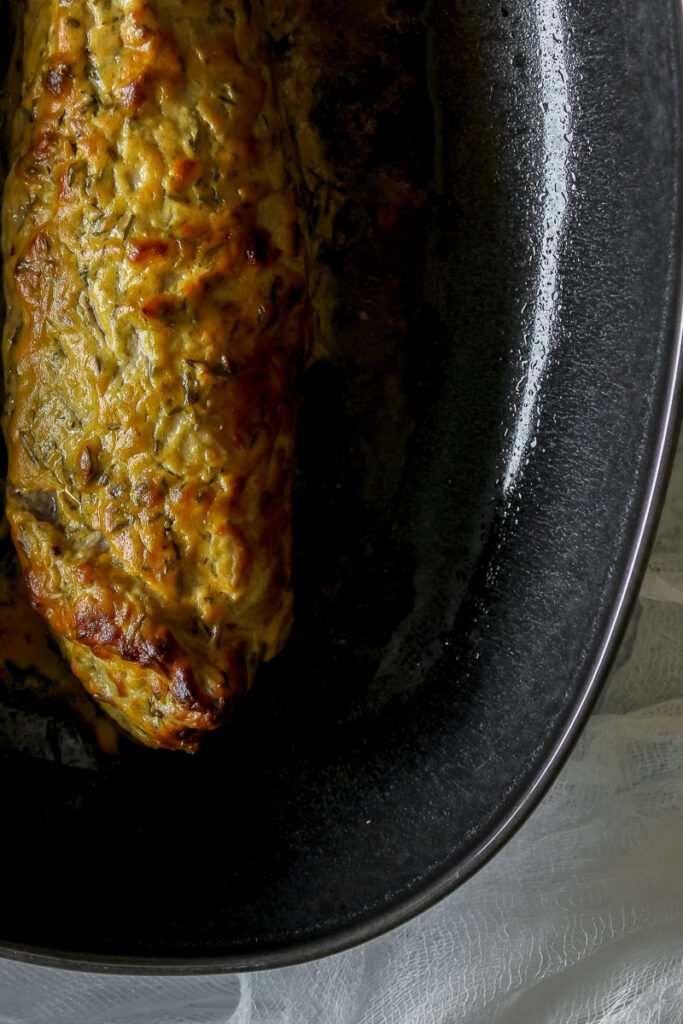
Pork tenderloin is a long, lean, and ultra tender cut of meat that cooks quickly and stays juicy when roasted properly. It usually weighs about 1 to 1.5 pounds and is completely different from pork loin — a much larger, thicker, fattier roast that requires longer cooking times.
Because pork tenderloin is so lean, it benefits from bold flavors and high heat roasting, which is exactly why Dijon mustard, olive oil, and dried herbs work beautifully here. The result is a tender, flavorful main dish that feels special but cooks in about 30 minutes.
Pork Tenderloin vs. Pork Loin: What’s the Difference?
Although their names are similar, pork tenderloin and pork loin are different cuts of meat. Pork tenderloin is a smaller, leaner cut that cooks quickly, making it ideal for weeknight recipes like this one. Pork loin is much larger and thicker, requiring a longer cooking time.
For the best results, be sure to use pork tenderloin in this recipe, as substituting pork loin will significantly change the cooking time and texture.
Essential Ingredients for Dijon Roast Pork Tenderloin
While the full recipe ingredients are available in the recipe card below, here is a breakdown of the key ingredients you will need for this juicy pork tenderloin recipe:
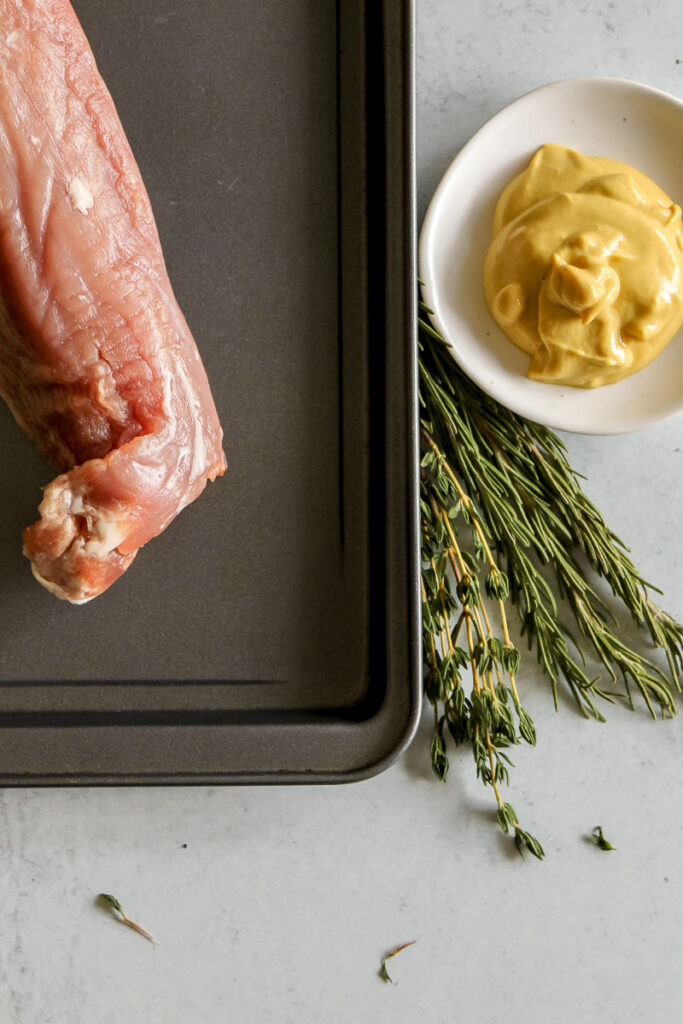
The most important ingredients in this recipe are the pork tenderloin, Dijon mustard, rosemary, and thyme. Together they create a flavorful herb crust while keeping the pork juicy and tender.
Pork Tenderloin Substitutions
Since this recipe uses just a handful of ingredients, there are a few substitutions you could make to this Dijon and herb-crusted pork tenderloin recipe.
Dijon Pork Tenderloin Flavor Variations
Thinking of adding more ingredients? Here are some ideas!
Time Saving Tips for Roasted Pork Tenderloin
- Make the Dijon herb sauce up to 24 hours in advance.
- Trim the silver skin ahead of time.
- Prep side dishes while the pork roasts.
- Use a meat thermometer to avoid guesswork.
- Slice leftovers for easy lunches throughout the week.
Step-by-Step Cooking Guide for Roasted Pork Tenderloin with Dijon Mustard and Herbs
While the full recipe instructions are available in the recipe card below, here are some tips to make this delicious roast pork tenderloin:
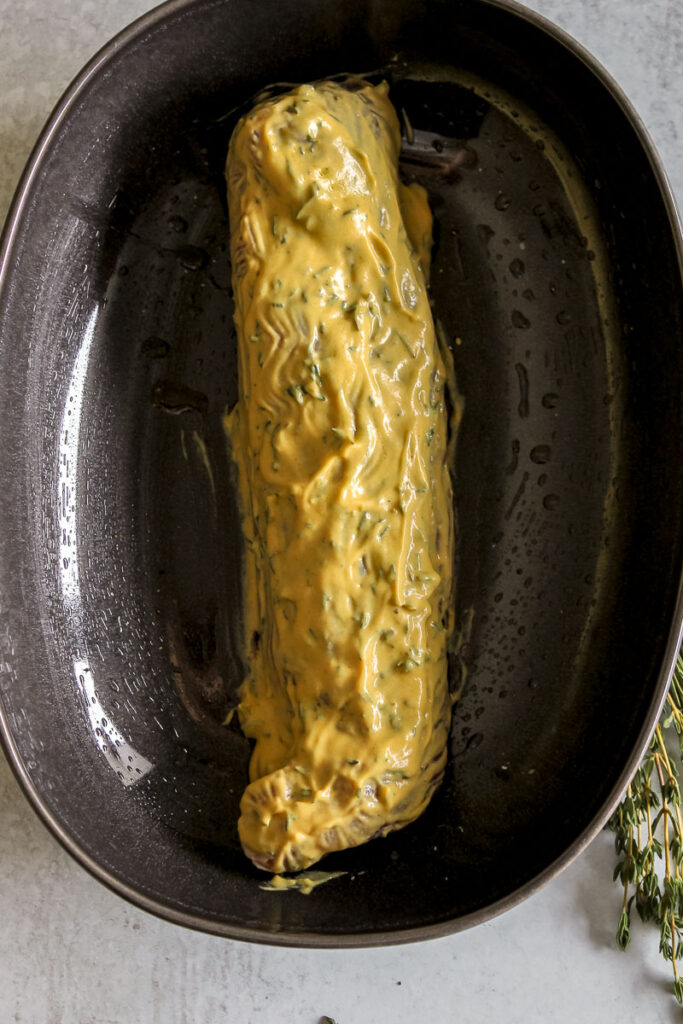
- Preheat your oven to 400 degrees F. While the oven heats up, prepare your pork. In a small bowl, mix together the mustard, herb mixture, and olive oil. Let it sit for a minute while you spray the baking sheet or dish with non-stick or olive oil spray. Remove any extra fat or silver skin from the pork. Place the pork tenderloin in the dish and spread your mustard sauce on all sides.
- Pop your prepared pork in the oven and let it cook for 25 to 35 minutes depending on how hot your oven runs and how thick your pork tenderloin is. You will know it is done once when a meat thermometer inserted into the thickest part of the pork shows an internal temperature of 145 degrees F.
- Cover the dish loosely with aluminum foil and let the pork rest for 5 to 10 minutes before serving. This is honestly the hardest part of the whole process! You will smell that delicious pork and Dijon sauce and want to dig in immediately.
- Use a sharp knife and slice the meat across the grain into medallions. Serve with your favorite veggies and sides.
Expert Tips for the Best Roasted Pork Tenderloin
- Use a meat thermometer. It’s the easiest way to guarantee juicy pork every time.
- Don’t skip removing the silver skin. It can become tough during cooking.
- Let the pork rest before slicing. This helps keep the juices inside the meat.
- Coat the pork evenly with the Dijon mixture. This creates a flavorful crust.
- Slice against the grain. This makes the pork more tender and easier to eat.
What Temperature Should Pork Tenderloin Be Cooked To?
Pork tenderloin should be cooked to an internal temperature of 145°F (63°C) as measured with a meat thermometer in the thickest part of the meat. Once it reaches temperature, let it rest for 5 to 10 minutes before slicing to allow the juices to redistribute.
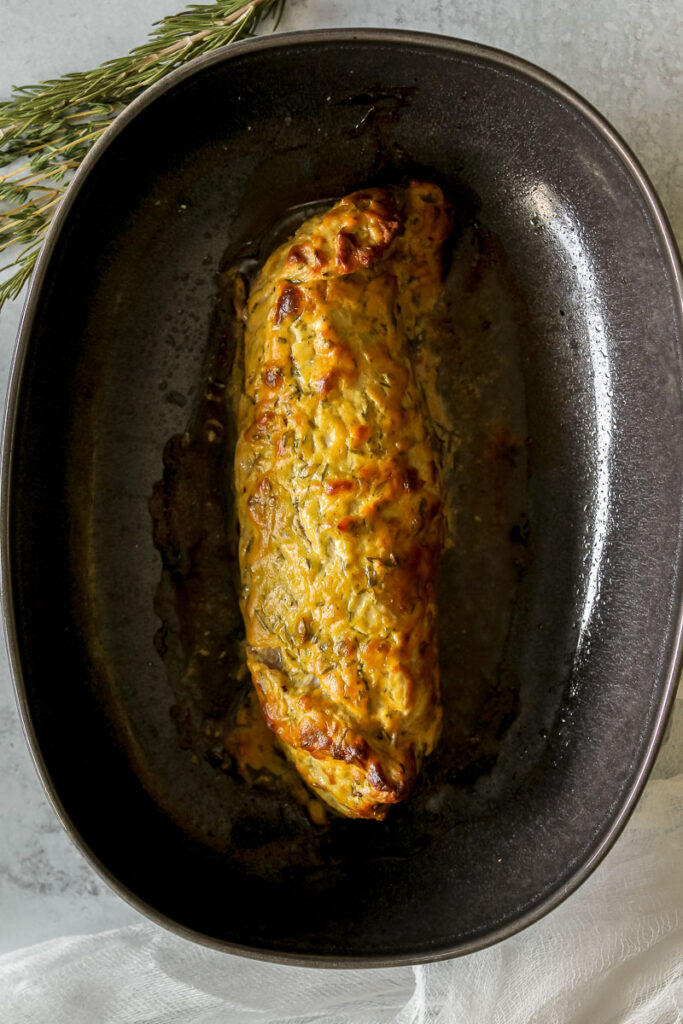
Serving Suggestions
This is one of my favorite quick weeknight dinners because it is so quick and easy to make. While this cooks in the oven, make your favorite quick veggies and starches and you have a well-balanced meal. Some of my favorites are air fryer potatoes, simple rice, or an oven roasted tomato caprese salad.
How to Store and Reheat Pork Tenderloin
Store leftover pork tenderloin in an airtight container in the refrigerator for up to 3 to 4 days. To reheat, warm slices gently in a skillet with a splash of water or broth, or microwave in short intervals until heated through.
You can also freeze cooked pork tenderloin for up to 2 to 3 months. Thaw overnight in the refrigerator before reheating in the skillet or microwave.
Common Mistakes and How to Avoid Them
The pork is dry.
- Why: It was overcooked.
- Avoid: Use a meat thermometer and pull the pork at 145°F.
- Fix: Serve with extra pan juices or a sauce.
The pork is tough.
- Why: The silver skin wasn’t removed.
- Avoid: Trim it before seasoning.
- Fix: Unfortunately, this can’t be corrected after cooking.
The pork lacks flavor.
- Why: Not enough seasoning was used.
- Avoid: Coat all sides thoroughly with the Dijon mixture.
- Fix: Serve with extra Dijon sauce or finishing salt.
The pork is losing juices.
- Why: It was sliced immediately after roasting.
- Avoid: Rest for 5–10 minutes.
- Fix: Let future batches rest before serving.
The pork isn’t cooking properly
- Why: Pork loin was used instead of pork tenderloin. Although the names are similar, they are completely different cuts of meat. Pork loin is much larger and thicker than pork tenderloin and requires a longer cooking time.
- Avoid: Double-check the label before purchasing. Pork tenderloin is usually long, narrow, and weighs about 1 to 1½ pounds, while pork loin is a much larger roast.
- Fix: If you’ve already started cooking a pork loin, continue roasting it until it reaches a safe internal temperature (145F with a rest after coming out of the oven) rather than following the timing in this recipe. Using a meat thermometer is the best way to determine when it’s done.
FAQ
Other Recipes To Try Next Time…
Did you make this recipe?
We’d love to see! Tag @makeitfasteasydelicious on Instagram and leave a comment below!
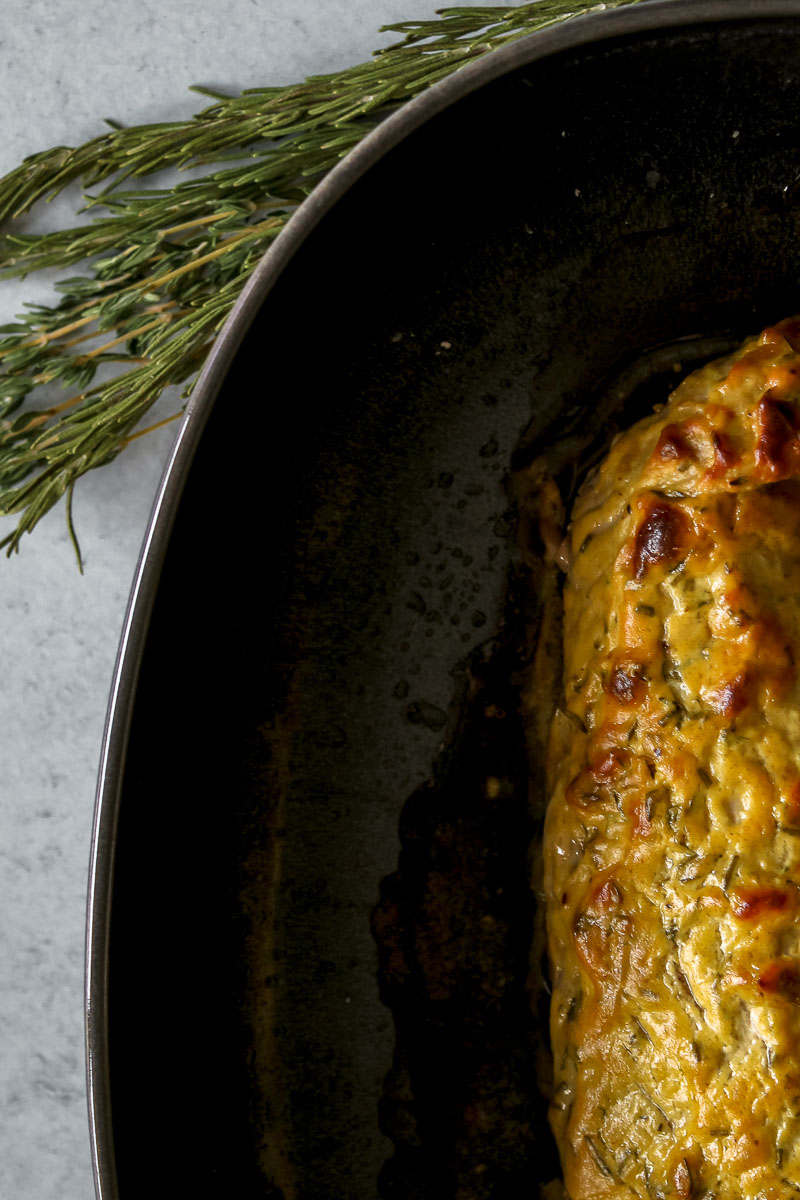

Roasted Pork Tenderloin with Dijon Mustard and Herbs
Ingredients
Equipment
Method
- Preheat the oven to 400°F (200°C). Lightly grease a baking dish or baking sheet with non-stick spray or olive oil spray. Trim any excess fat and silver skin from the pork tenderloin and place it in the prepared baking dish.
- In a small bowl, combine the Dijon mustard, olive oil, dried thyme, and dried rosemary until smooth. Spread the mustard mixture evenly over all sides of the pork tenderloin.
- Roast for 25 to 35 minutes, or until an instant-read thermometer inserted into the thickest part of the pork registers 145°F (63°C). Remove from the oven and loosely tent with foil. Let the pork rest for 5 to 10 minutes before slicing. Slice the pork across the grain into medallions and serve with your favorite vegetables, potatoes, or rice.
Nutrition
Notes
- Removing the silver skin helps ensure tender, evenly cooked pork.
- Pork tenderloin is done when it reaches 145°F and may still have a slight blush of pink in the center.
- Letting the pork rest before slicing helps retain its juices.
- Leftovers can be refrigerated for 3-4 days or frozen for 2-3 months.